
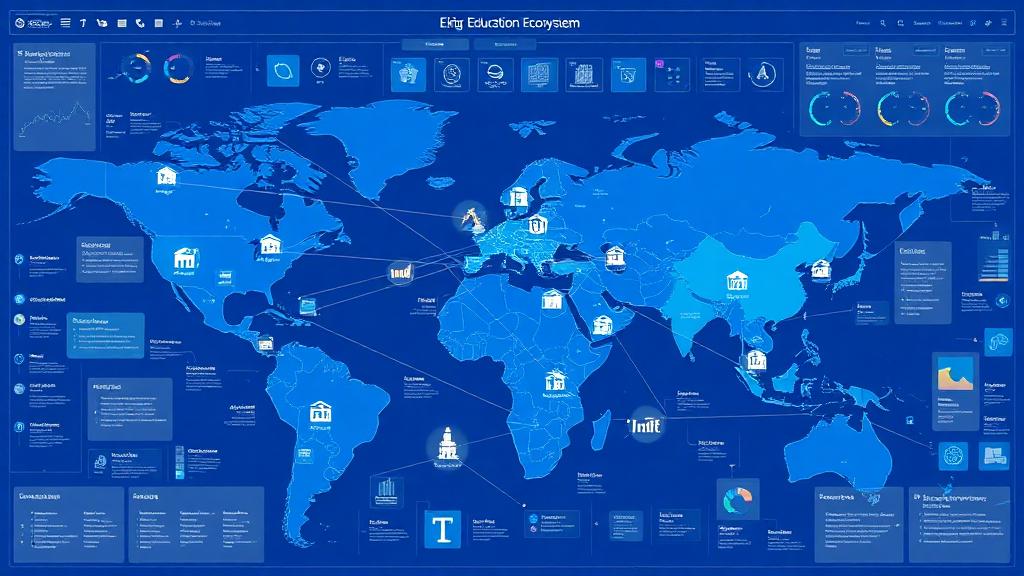
Government skilling and education programmes operate under constraints private platforms rarely face: millions of users, uneven connectivity, multiple languages, strict audit requirements and public accountability for every rupee, ringgit or dollar spent. Scale here is an operating model, not a server count.
Key insights
- Scale demands configurable workflows, not custom rebuilds.
- AI-assisted validation protects programme integrity.
- Real-time monitoring shifts governance from audit to steering.
Design for configuration, not customisation
National programmes change scheme rules, eligibility, incentive structures and reporting formats regularly. If each change is a development ticket, the platform becomes the bottleneck for policy.
Systems that survive define schemes as configuration: eligibility rules, approval chains, funding tranches and evidence requirements are authored by programme administrators and versioned for audit.
- Scheme templates that can be cloned and adjusted per state or district
- Versioned rule sets so historical claims are evaluated under the rules of their time
- Role-based approval chains that mirror the actual administrative hierarchy
Integrity as a first-class requirement
Public programmes attract scrutiny and, occasionally, fraud. AI-assisted validation — biometric or liveness checks at attendance, duplicate detection across centres, anomaly detection in assessment patterns — protects both the budget and the credibility of genuine beneficiaries.
Every automated flag should be reviewable by a named officer with the underlying evidence attached. Automation raises throughput; humans retain accountability.
Reaching the last mile
Connectivity is the deciding factor for rural delivery. Offline-capable mobile clients that sync when a network appears, low-bandwidth content variants and vernacular interfaces are not nice-to-haves — they determine whether a district participates at all.
From audit to steering
The strategic payoff of scale is real-time visibility. When enrolment, training, assessment, certification and placement flow through one spine, a ministry can reallocate capacity mid-cycle instead of discovering underperformance in a year-end audit.
What this means for your programme
Scalable public platforms are built from configurable rules, verifiable evidence and last-mile access. Get those three right and volume becomes an engineering detail.
If any of the themes above map to a challenge you are solving, our team can share how comparable programmes were designed, deployed and measured at scale.